


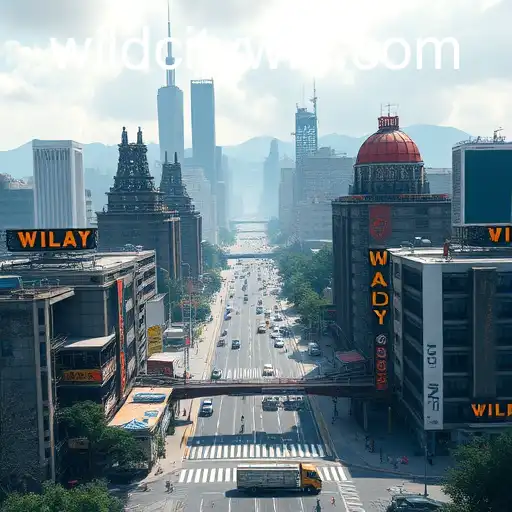
A deep dive into the immersive Wild City craze, blending gaming, virtual reality, and urban exploration.
As we usher in the exciting year of 2026, a remarkable digital phenomenon has taken the gaming community by storm: Wild City. This new genre of gaming ingeniously fuses urban exploration with virtual reality, creating immersive experiences for players eager to explore lifelike cityscapes without leaving their homes.
Wild City games allow players to roam and interact within meticulously crafted digital urban environments that replicate real-world city dynamics down to the smallest detail. With advancements in virtual reality technology, players are no longer confined to linear paths but can wander freely, discovering hidden alleys, underground bazaars, and towering skyscrapers.
The appeal of Wild City games extends beyond the gaming realm, as these virtual spaces often become platforms for creative expression and social interaction. Players can partake in community events, customize their avatars, and even contribute to the urban expansion of their digital cityscapes, making each experience unique and personal.
What sets Wild City apart is not just its technological prowess, but also how it reflects current societal dynamics. In an era where urban living conditions are often scrutinized, these games offer a utopian alternative, a chance to reconstruct cities without the constraints of modern society. This blend of escapism and reality prompts players to consider the implications of urban design and sustainability.
Moreover, recent developments within the Wild City genre have seen collaborations with city planners and architects, integrating real-world urban data into the game ecosystems. This pioneering approach not only enhances the realism of the gaming experience but also provides insightful case studies for urban development in real-world contexts.
As we look towards the future, the Wild City phenomenon is poised to influence both gaming and urban planning. By merging the digital with the tangible, Wild City games continue to captivate audiences worldwide, suggesting a growing interest in the interplay between virtual and real cityscapes. It is this dynamic fusion that will likely drive new innovations and interest in both fields.

